
Where Do We Go From Here?
The Ethical Technologist series: Faith, Power, and Political Myth, Post 5

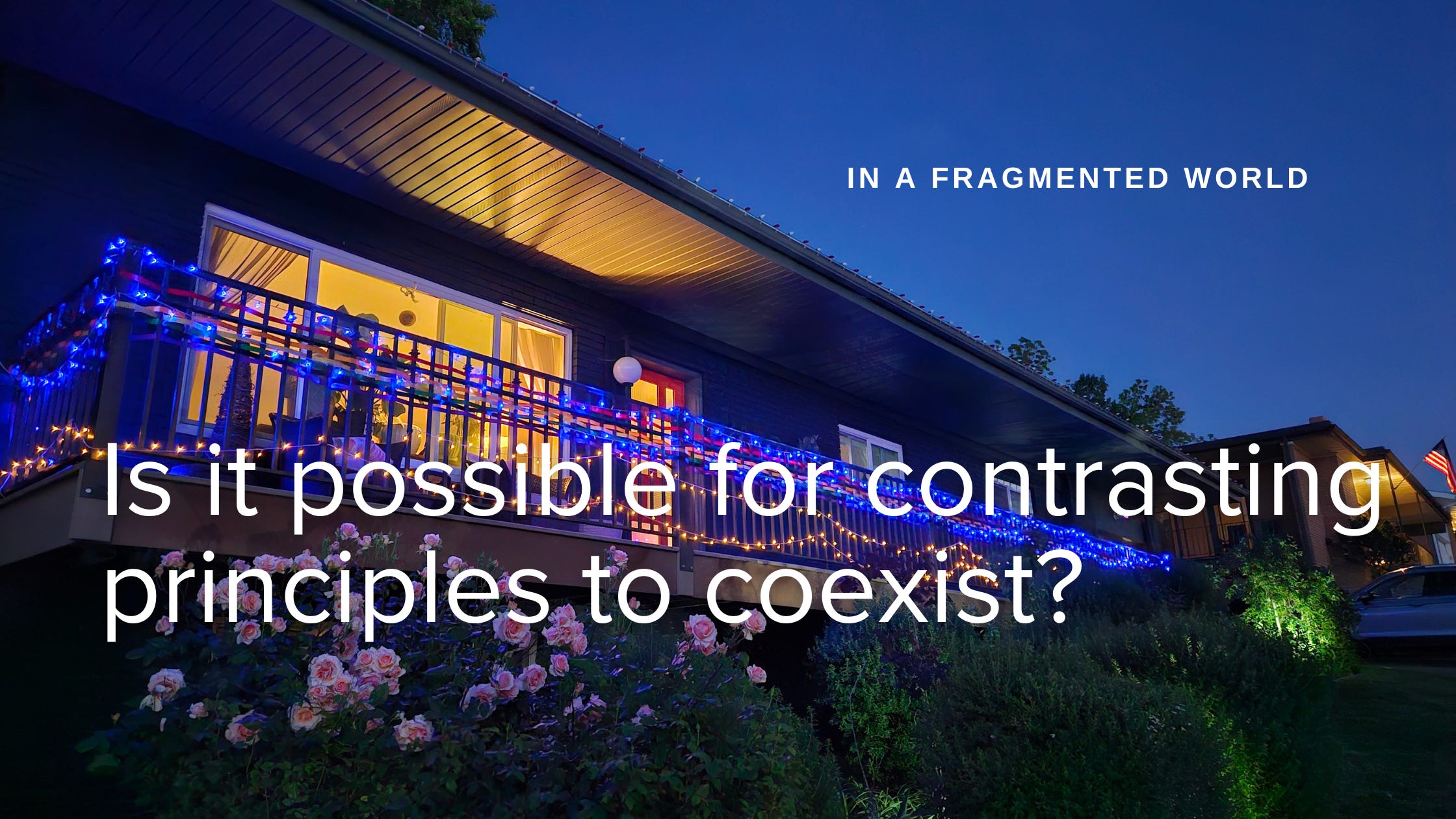
🌍 Embracing Pluralism in a Fragmented World
In today’s polarized climate, embracing pluralism feels both essential and challenging. As a parent, I grapple with guiding my children through a world rife with conflicting ideologies. It’s a delicate balance to instill values while encouraging open-mindedness.
I try to focus on kindness.
“[Christ’s] true disciples build, lift, encourage, and inspire, no matter how difficult the situation.”
President Russell M. Nelson
Years ago, I wrote an article for a faith-based website about the intersection of doubt and faith. There’s some pluralism for you: where two contrasting principles coexist. Here’s what I said:
I believe that faith depends on, even demands, that we experience doubts… The power of doubt comes in how we choose to respond.
At the time, I was thinking of the theological sense: that a sturdy faith isn’t born of certainty, but of weathering the moments when certainty vanishes. That belief, if it is to be real, must come with room for mystery. But now, I see something even deeper in what I wrote.
Doubt today isn’t just a personal spiritual trial. It’s a public condition. We doubt institutions. We doubt each other’s motives. We doubt whether it’s even possible to disagree with someone without immediately suspecting moral rot or brainwashing. In an algorithmic age, where outrage is currency and digital tribes harden their borders with every post, doubt is both more necessary and more dangerous than ever. Because to truly hold space for doubt now is to resist the pressure to immediately pick a side and shout. It means being brave enough to say, “I don’t know, but I’m still listening.”
As a parent, this is one of the hardest things to model. I want to give my kids a clear moral compass. I want them to know where we stand on issues of justice, compassion, and truth. But I also want them to see that holding conviction doesn’t require certainty about everything. I want them to ask questions and not be afraid of what those questions might reveal. I want them to see that humility isn’t weakness and that doubt, properly stewarded, can deepen faith rather than destroy it.
That kind of pluralism — of thought, of belief, of identity — requires more than tolerance. It requires relationship. It requires showing up in complexity, letting others do the same, and resisting the impulse to flatten one another into caricatures. It isn’t easy. But it’s the only way forward I can see that doesn’t end in shouting across a canyon.
🤖 Staying Human in the Algorithmic Age

From David Brooks’s article, that’s been the impetus for this series, he wrote:
I had forgotten how exhausting it is to live in Donald Trump’s world. He’s not only a political figure. He creates a psychological and social atmosphere that suffuses the whole culture — the airwaves, our conversations, our moods.
If there is one word to define Trump’s atmosphere, it is “pagan.”
~David Brooks, “How to Survive the Trump Years With Your Spirit Intact”
That chaotic, ever-amplified, emotionally exhausting atmosphere has become our digital weather system. And whether we like it or not, we help power it.
The algorithm isn’t a villain hiding in a dark server room. It’s a mirror, tilted and profit-driven, but responsive to all of the little choices we make every day.
It responds to:
What we choose to read (and what we doomscroll).
What we share.
What we react to with a like, or a laugh, or an angry face.
Who we follow and who we block.
What we give our attention to, even briefly.
The algorithm learns from us, and it shapes what we see next. This isn’t neutral. It isn’t passive. It’s a dynamic feedback loop, and we are all input and output at once.
To stay human in this system requires intention. It requires resisting the reflex to retweet the snarky comment that made us feel vindicated. It means thinking twice before joining in the pile-on, no matter how deserved it seems. It means asking ourselves not just “is this true?”, but “is this helping?”
In the same way that ethical consumption is a fraught but necessary lens in economics, ethical engagement has become a digital survival skill.
🕊️ Values, Fear, and the Soul of a Neighborhood

My neighbor (one of my favorite people) has been in the ICU for many days. Her illness came suddenly and savagely, with surgery and setbacks and the quiet, creeping dread that settles in your stomach when someone you love slips toward the edge of life. There was a day when I heard that she wouldn’t make it. I cried that afternoon. Not just because I was grieving, but because I heard from her son that I was someone she loved.
I’ve never known exactly how to describe our friendship. We’d talk in her front yard when she was out with her garden, or while grabbing the mail. I never wanted to intrude. I’m painfully conscious of boundaries, but I always left those conversations feeling a little steadier.
Just a few weeks ago, she drove me to the airport at dawn. She was navigating her own family’s struggles (her husband still hasn’t found a job that matches his experience after downsizing at his last company), but she was happy to help me out so my husband could get the kids ready for school. When I was back in town, she helped me pick out a spot for an evergreen I’d bought.
The only reason I got to be there when things went dark was because we already had a relationship. Her family is private, rightfully so. But they let us in. Because we were already there.
Since she’s been in the hospital, another neighbor and I have been communicating constantly about updates and things to do to help. It’s been our little society of futility. Or so it feels right now.
But this is what I mean by values over fear. This is what I mean by soul. It’s the choice, again and again, to build community before crisis. So when the pain strikes, we’re not just bystanders, we’re kin.
There is no digital replacement for this. There’s no app. There’s only presence. There’s only time.
Søren Kierkegaard wrote, “Faith is the highest passion in a human being. Many in every generation may not come that far, but none comes further.”
Even amidst uncertainty, even in grief, I want to be moved by that kind of passion — a passion for my kids, for my neighbors, and for a vision of the world that doesn’t run on fear, but on love.
📝 Ethical Technologist Notes
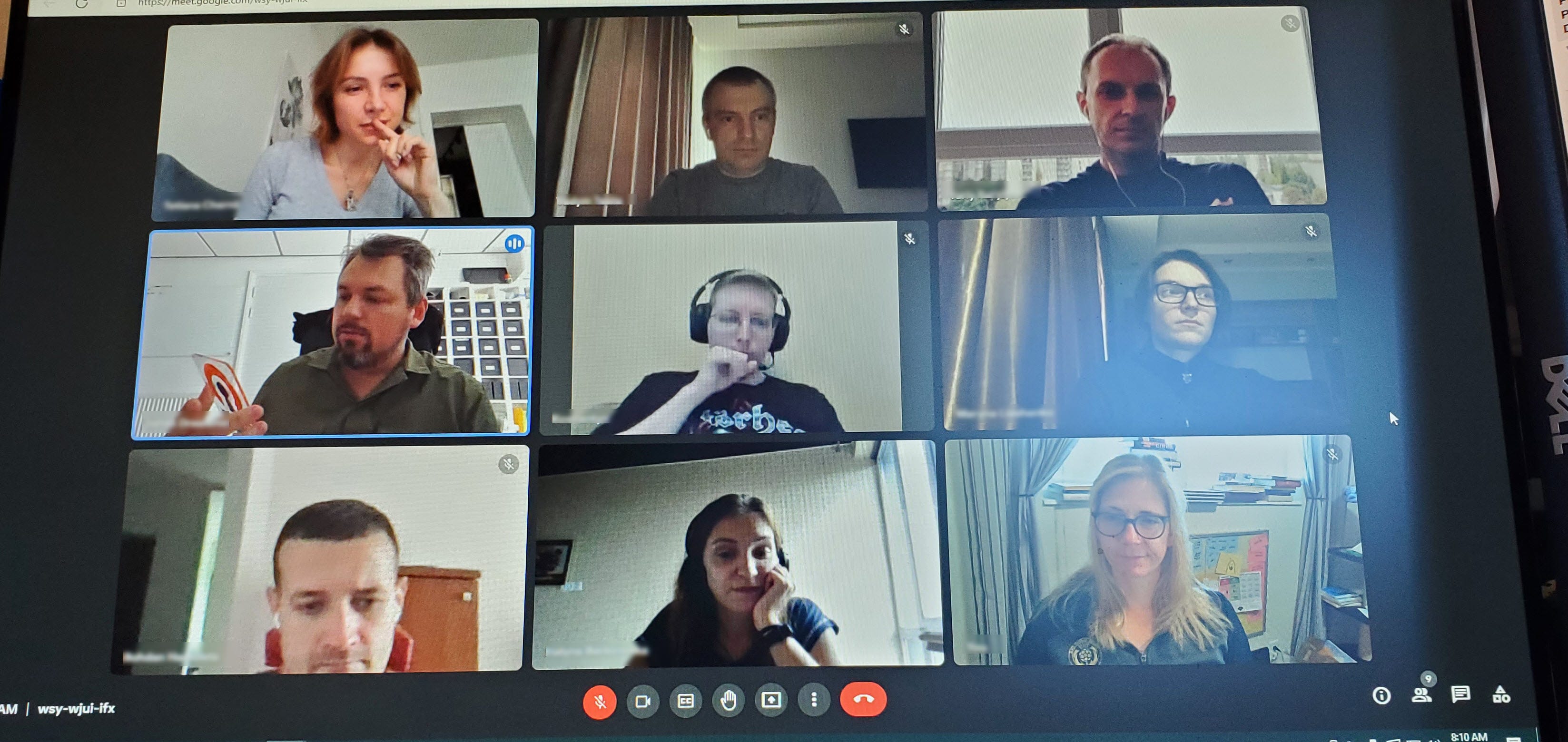
Three times a week, I join video calls with coworkers scattered across continents. There are the QA team and developers in Ukraine who connect from cities I can now locate on the map. There’s the super support engineer from Colombia who also shares favorite foods. The product manager in the Netherlands has a wicked sense of humor. And the Canadian who posts laughing emojis on the funny memes in the #random channel.
These aren’t just coworkers. They’re part of my expanded moral ecosystem.
We build documentation together, yes, but even that quiet work sits within the larger architecture of trust, privacy, and digital safety (even more so than a guide for a system administrator launching a VPN server in AWS). My job might not spark revolutions, but it contributes to a stable scaffolding for those doing the work for dissent, care, or innovation.
We edit each other’s drafts; we critique without condescension. We laugh a lot. There’s grace in those moments, too.
I believe ethics live in the systems we build, the rituals we repeat, and the quiet choices we make every day. That includes both the code we write and the documentation we publish. It includes the tone of our internal messages. It includes whether we remember to ask how someone’s doing before launching into our task list. (I forget this so much on Slack.)
In a world shaped by outrage and acceleration, slowing down to check in can be a radical act.
This is the end of this series, but not the end of these questions. I’ll keep writing. I’ll keep building. I’ll keep listening.
And I’ll keep trying to breathe a moral atmosphere that smells a little more like compassion.