
The Return of Raskobism
History's favorite billionaire theory is back

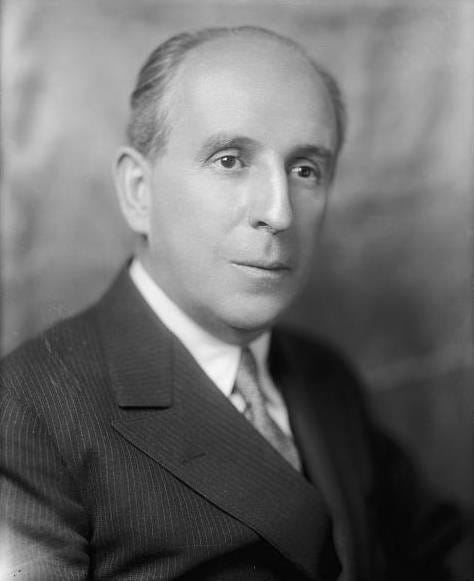
In 1929, a wealthy industrialist named John J. Raskob mansplained to all of average America that anyone could become rich by investing fifteen dollars a month in the stock market. It’ll only take twenty years. This advice was delivered roughly minutes before the economy collapsed in a way historians later described as “suboptimal.” Critics eventually coined a term for this charmingly detached worldview: Raskobism — the belief that markets, wealth, and optimism will solve society’s problems if government would simply GET OUT TH’ DAMN WAY.
Historians assumed Raskobism died during the Great Depression, much like flapper fashion and Art Deco.
But my recent, in-depth field research (primarily scrolling Instagram while getting some vitamin D in the backyard during my lunch break) suggests the ideology has re-emerged. I’ve found it appears most commonly on podcasts hosted by men who own at least three pairs of cowboy boots, tout the life-changing impacts of peptides, and call themselves “builders.”
What is Raskobism?
Raskobism can be summarized as elite optimism detached from economic reality, which sounds harsh. Until you read it again, thinking of American industry. Remember when we had a middle class? I’m old enough to remember.
The core Raskobism ideas are simple, and frustratingly durable:
Markets will fix everything.
Wealth provides wisdom.
Regulation is the real problem.
Anyone can succeed if they simply invest, hustle, bootstrap, disrupt, or start a startup that disrupts the disruption.
In 1929, these ideas arrived in pinstripe suits and ticker tape. So much ticker tape. In 2026, they arrive in hoodies, venture capital decks, and a confident explanation that society’s problems are easily fixed by AI.
Different decade.
Same sermon.
The Silicon Valley Upgrade
If Raskob were alive today, he would absolutely have a podcast, complete with live YouTube streaming, a microphone that costs more than my SUV, tasteful LED lighting, and a producer that says things like, “we’re crushing the algorithm.” He would launch every episode by leaning into the microphone and announcing, in a tone of great intellectual bravery, “Look, I’m just asking questions,” which is the modern signal that a person is about to ask several extremely confident questions. These questions would then arrive in rapid succession: What if democracy is inefficient? What if regulation is the real bottleneck? What if poverty could be solved by an app? What if climate change could be handled by a subscription model? And perhaps, if time allowed, what if the real problem with society is that too many people insist on having problems that markets haven’t yet monetized?
His original pitch was that ordinary Americans could build wealth by investing fifteen dollars a month. The modern version is slightly more ambitious. Today’s prophets of economic destiny suggest that anyone can succeed if they launch a startup, tokenize something, disrupt an industry, pivot to AI, pivot again to AI agents, and eventually pivot into a thoughtful thread explaining why the government is the only obstacle standing between humanity and the glorious future of automated prosperity.
The theory, when you hear it explained on the right podcast, might come off as elegant. Markets will solve poverty. Venture capital will solve climate change. AI will solve inefficiencies in healthcare, education, and government. Somewhere in the middle of this argument, there’s usually a slide deck containing a graph that goes up and to the right, which economists recognize as the most persuasive form of evidence known to mankind.
Oh my gosh, you guys! What if the real problem with society is that too many people keep expecting billionaires to solve it?
The difference between Raskobism in 1928 and Silicon Valley ideology in 2026 is mostly the typeface.
Which is obviously sans serif today.
Symptoms of Raskobism
Raskobism spreads like a digital virus through podcasts, Twitter threads, and keynote presentations delivered by men standing in front of minimalist slides with the word Future written in Helvetica. You may not realize you’ve been exposed until the symptoms begin to appear, usually sometime between your third podcast episode and your first confident opinion about how society should be reorganized.
The early stages are subtle. The patient develops a mild but persistent belief that billionaires understand society better than the people who actually live in it. This often progresses into describing regulation as “innovation suppression,” which is the economic equivalent of insisting that traffic lights are anti-car propaganda and part of a coordinated effort to slow down progress. At this stage, the patient may also begin suggesting that social safety should be replaced by an app with a sleek interface and a monthly subscription model that sends motivational push notifications reminding users to simply TRY HARDER.
As the condition advances, the patient begins hallucinating about systems-level solutions. These usually involve phrases like “AI-driven optimization,” “frictionless coordination,“ and “platform-mediated outcomes,” which sound impressive until you realize they translate roughly to “someone will probably vibe code an app for that.” At this point, the patient may also adopt a more elevated tone (perhaps even literally), imagining themselves standing atop a capitalistic skyscraper with its own localized weather systems, confidently announcing that large-scale economic hardship could be resolved if people would simply make better life choices and perhaps download the correct platform.
Eventually, the patient begins ranting about how society’s largest problems aren’t complicated at all. They simply require a cloud computing architecture. The economy needs an interface. Public services need automation. Democracy needs a product manager. The people, it turns out, don’t need systemic reform, collective investment, or policy change. They simply need to optimize themselves.
Which is, in essence, the updated version of Raskob’s original economic theory.
Just invest fifteen bucks a month.
Over twenty years.
And presumably, make better choices.
Recommended Treatment
If you or a loved one begins displaying symptoms of Raskobism, experts recommend several interventions. The first is exposure to historical literacy, particularly the parts involving the stock market crash of 1929 and the decade that followed, which brilliant historians summarize as “the part where optimism stopped working." This treatment can be uncomfortable at first, especially for individuals who strongly believe the economy behaves like a well-trained golden retriever that always brings prosperity back when you throw enough money at it.
The second is a careful application of antitrust law, which has historically shown promise in treating concentrated economic optimism. Economists have long observed that markets function better when competition exists, which unfortunately reduces the number of billionaires who can confidently explain on podcasts why the rest of us simply need to work harder and believe more strongly in the invisible hand.
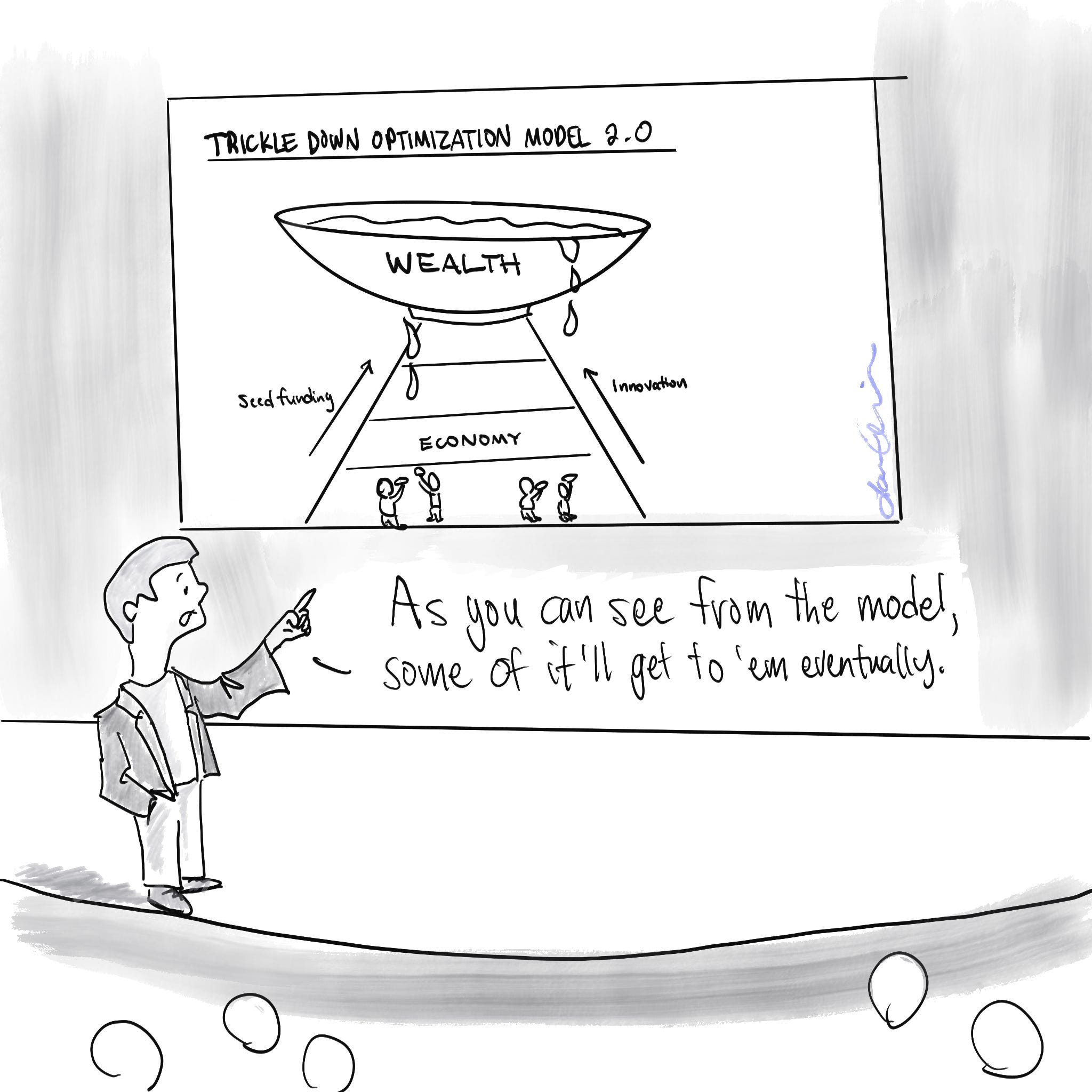
In more advanced cases, patients may also require a brief educational module on trickle-down economics, a theory suggesting that if enough wealth is poured at the top of the economic pyramid, prosperity will eventually drip politely down to everyone else. Economists who study these things for a living have spent several decades pointing out that the wealth mostly does not trickle. It tends instead to remain exactly where it was poured, much like gravy at Thanksgiving.
Finally, patients should practice deep breathing, ideally while repeating the phrase: “Markets are powerful tools, not magical weather systems.” Depending on how the patient responds, the phrase may need to be repeated several times while slowly closing a browser tab containing the words disruption, founder mindset, or alpha thread.
Recovery is possible.
Although it may require unsubscribing to a podcast.
So Who Was Raskob?
John J. Raskob himself was not some fringe crank shouting economic theories from a street corner. He was a wealthy industrialist who worked for General Motors, helped finance the Empire State Building, and maintained close ties with the duPont family. Because if you’re going to reshape American economy, it’s helpful to have a few chemical billionaires in your contacts. He also held significant influence inside the Democratic Party during the 1920s. In other words, he was exactly the sort of successful and confident figure Americans love to listen to when he explains why prosperity is inevitable and probably already on its way.
He also had a deeply human quality that historians politely refer to as political motivation, which is a gentle way of saying that he cared very deeply about economic theory immediately after his preferred candidate lost an election.
Raskob had backed a candidate who lost to Herbert Hoover in the 1928 election, which didn’t improve his opinion of Hoover’s economic management. He soon launched an energetic campaign criticizing the president while promoting the idea that widespread stock market investment would allow Americans to share in the nation’s booming prosperity. The theory was elegant, optimistic, and extremely popular among people who already had money, access to markets, and a general sense that things were going well for them personally.
It was, in short, the economic equivalent of pouring gravy very confidently onto the top of the national dinner table and assuring everyone seated below that it was absolutely, definitely making its way down to them.
Any minute now.
The timing, unfortunately, was terrible.
A Reminder About Political Labels
In a world full of uncertainties, I am pleased to offer you one reliable constant: American political parties will, without warning, reinvent themselves. The Democratic Party of the 1920s doesn’t resemble the Democratic Party of today. The Republican Party of the 1860s would require a lengthy onboarding process, several whiteboard diagrams, and at least one deeply uncomfortable Q&A session if suddenly transported to the present.
Political parties don’t move in straight ideological lines. They swing around like a malfunctioning windshield wiper, occasionally clearing things up, but more often smearing everything into a confusing blur before snapping loose and slapping the entire country across the face.
This is one reason I personally don’t align with any particular party. At this point in my life, I am mostly interested in starting my own, primarily so I can stop trying to explain why none of the existing options feel like they were designed by people who have recently interacted with reality.
The platform would be simple. The meetings would include snacks, because history has shown that very few bad decisions are made when people are holding a plate of something warm and slightly carb-heavy. And the leader would be Emma Hayes, because she is one of the few people currently operating in public life who can manage chaos, communicate clearly, inspire, motivate, and willingly dance with Trinity Rodman on the sidelines.
Her policy agenda would be refreshingly direct: dominate possession through the midfield, press intelligently, stay organized at the back, and under no circumstances take direction from a man who says he’s going to “circle back” and record a podcast with a billionaire guest.
And unlike most political systems, substitutions would be allowed.

The Ethical Technologist Weighs In
Look, I know how the saying goes. But I’d argue it’s wrong.
History isn’t bound to repeat itself.
History RARELY repeats itself… in exactly the same form. What it tends to do instead is update the software. Old ideas receive new branding, new vocabulary, and occasionally a venture capital round. Raskobism didn’t disappear after the Great Depression; it simply migrated forward in time, reappeared in Silicon Valley, and began explaining on podcasts why disruption is more important than stability.
The names change. The technology changes. The confidence remains exactly the same.
And so every generation eventually rediscovers the same economic theory: that prosperity can be engineered from the top down if the right brilliant people are allowed to pour enough money into the system and wait patiently for the benefits to trickle where they’re needed.
History suggests that, much like lumpy gravy, the results depend heavily on where you’re sitting at the table.
Which is why the next time someone calmly explains that a new technology will automatically solve every human problem, it may be worth remembering the wisdom of 1929.
Or at least setting aside fifteen dollars a month.
Preferably not in 1929.
Also, I vote Emma Hayes too!❤️
I need a shirt with, " Anyone can succeed if they simply invest, hustle, bootstrap, disrupt, or start a startup that disrupts the disruption." on it. 😁