
Standing to Sue and the Turds of Liberty
🧻 An exploration of abstract injury, Brussels sprouts, and neighborhood threats


Let’s talk about injury.
I’ve never had a broken bone fixed. Not bad for 45 years on this earth. My titanium toe was caused by a dislocation. Toss in a few more dislocations, a herniated disc, spinal stenosis, and a deviated septum, and I know a thing or two about pain.
But I’m not talking about what happens when you think, “I can absolutely beat that 13-year-old to the ball” and sprain your ankle so hard your insurance company adds you to the National Register of Historic Places.
Nope. Let’s talk about legal injury.
Now that I have you on the edge of your ergonomic office chair, let me tell you about the two audiobooks I’m currently listening to:
📚 Listening to the Law by Amy Coney Barrett
📚 Lovely One by Ketanji Brown Jackson
(One memoir is like a bedtime playlist for originalists; the other is like pouring lavender oil directly onto your frontal lobe.)
In Barrett’s book, she discusses something lawyers (and anyone still wearing shoulder pads) care a lot about: standing.
Standing hurts me. Remember the bad back? Yeah. Standing is THE WORST. But this isn’t about posture or waiting in line to buy the new LDS garments, or even one last ride on JetStar 2 in hopes it snaps your back into 2003 alignment.
In legal terms, standing means: Are you injured enough to sue someone’s pants off?
To illustrate, she gives this example:
“A hiker who frequents a forest has standing to object to its destruction; a hiker who has a general interest in forests does not.”
Got that?
If you’re huffing and puffing up Frary Peak on Antelope Island, and the state decides to turn it into a luxurious Great Salt Lake Resort (before the lake dries up and the whole thing becomes a toxic-dust apocalypse), then you have standing.
If you just like forest aesthetics on Pinterest? Tough luck, Bambi.
There’s a difference between an abstract injury and a concrete injury.
But in America, we don’t like being told we can’t sue (especially if you’re one of Trump’s lawyers or inside his DOJ, which are now fusing together like a radioactive meatball while we all wait for the Epstein files to drop).
So, naturally, we’ve decided to treat abstract injuries the same way we treat portion sizes at Cheesecake Factory:
Supersize it. Then demand a refund for emotional distress.
🔥 Abstract injuries: A field guide
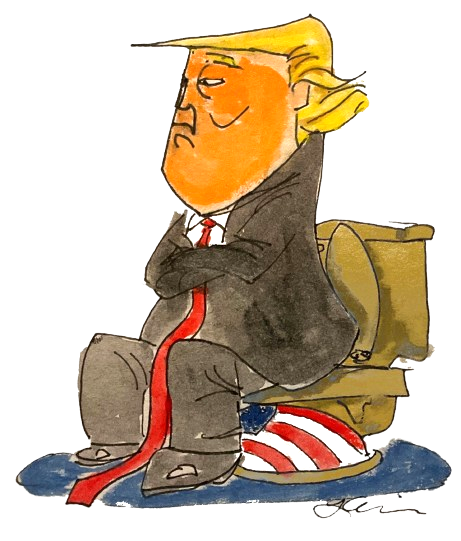
Let’s begin with Donald Trump, who is the biological embodiment of an abstract injury. He is America’s bruised banana. Our sentient whine. A man so deeply wounded by the modern toilet that he once claimed—and this is real—that you have to flush it 10 to 15 times.
Let’s unpack this.
The leader of the free world, surrounded by nuclear codes and intelligence briefings, was instead hyper-focused on how weak our toilets had become.
According to Trump:
His turds are too mighty for liberal plumbing.
Melania, in what can only be described as passive-aggressive revenge, forces him to eat raw Brussels sprouts, which (and I quote from absolutely no source), “come from the deep state.”
The brass toilet handle, once a symbol of American strength, now crumbles beneath his righteous bowel movements.
So yes, he is injured.
Gravely. Abstractly.
And in today’s courts of public opinion, that’s enough.

🏈 Local abstract injuries: Bountiful edition
Closer to home, let’s talk about the deeply traumatizing experience of the neighborhood football fundraiser kid.
You know the one:
Mildly muscular.
Smells like Axe body spray and cafeteria tater tots.
Comes to your door with those laminated “discount cards,” and the energy of an LDS missionary who got separated from his companion.
Is he a threat? No.
Does your neighbor think he’s a homegrown Antifa sleeper agent here to replace their pantry oils with polyunsaturated fats? Absolutely.
In reality, he just wants you to fork over $20 so you can save 50 cents on breadsticks at Little Caesars. (RIP Robintino’s — second closure, probably for good this time.)
But in America, fear of teenage cardio counts as an existential threat. Or it does in my neighborhood.
And then there’s me, who, during Halloween last year, dared to put out a garden-tucked political sign quoting Kamala Harris.
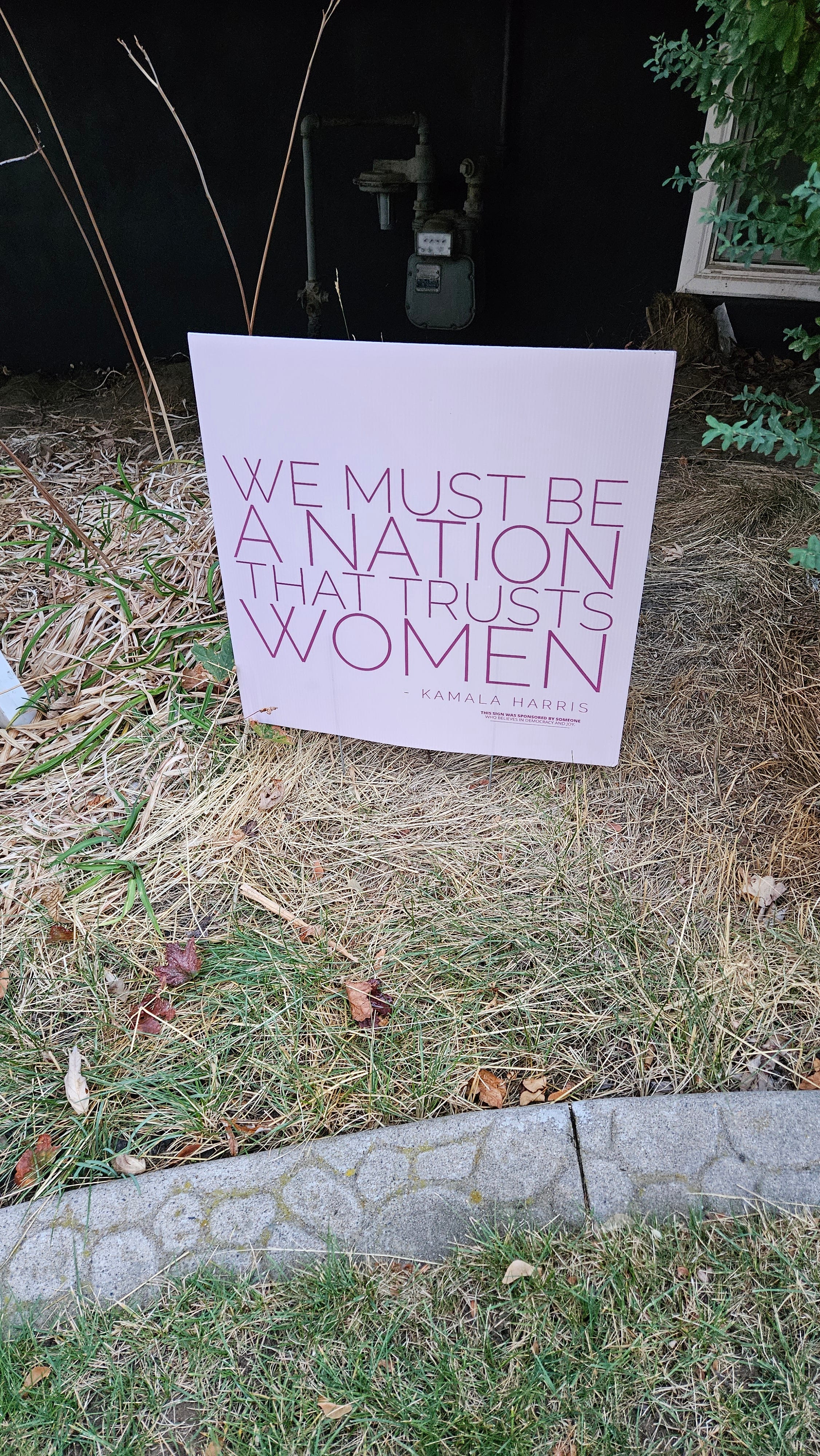
Scandalous, I know. Practically domestic terrorism in Bountiful.
Someone didn’t just disagree with my sign. They infiltrated my landscaping.
I wish I were exaggerating on this one, but I’m not and I DON’T have footage (we checked the two cameras and the angles covered):
They approached from the north, slinking under the front porch deck like a raccoon with a grudge.
Maneuvered behind the bushes like a Call of Duty side mission.
Yanked the sign, then retreated like a cowardly political ninja.
All this for a small, non-confrontational sign politely resting in the dead artistic grasses next to some pokey bushes.
Because apparently, nothing threatens the delicate moral fabric of Davis County like a quote about trusting women.
That, my friends, is abstract injury.
That’s the American dream.
📱 The algorithm of injury
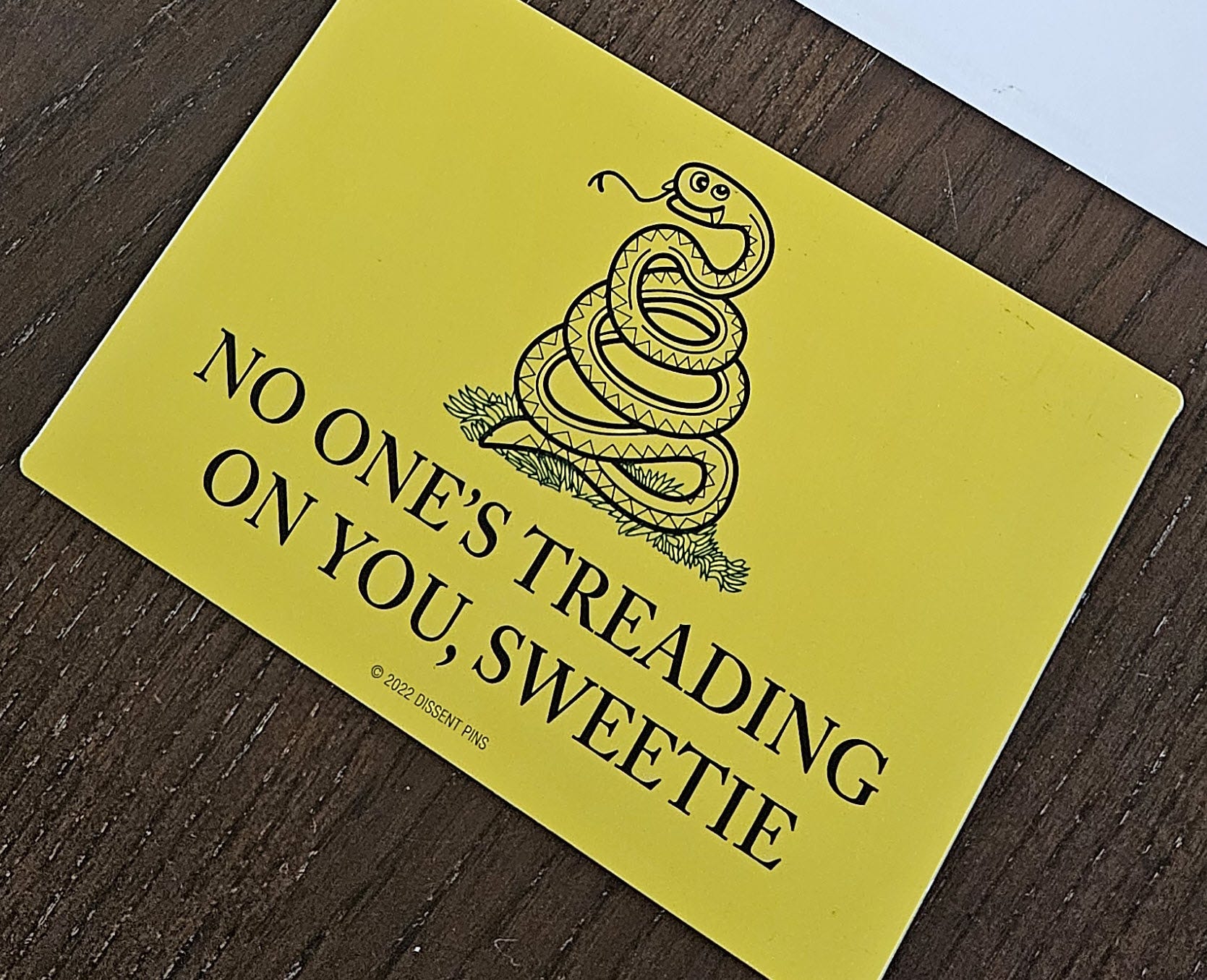
And of course, there’s social media… the sacred temple where we now worship offense.
A place where we manufacture outrage faster than ChatGPT can write 84 captions for your dog’s Instagram account.
Ever scrolled Instagram and been hit with:
A child’s birthday cake so elaborate it required its own film crew?
A political rant from your uncle about how barcodes are tracking his emotions?
A targeted ad for stool softeners because you Googled “turds of liberty” once?
That’s not a glitch.
That’s the algorithm weaponizing your brain against you.
We don’t even have to experience injury anymore.
We just have to scroll, and we’ll be personally victimized by:
A momfluencer with 19 kids and hair that defies the laws of physics.
A tweet about the fall of democracy.
A 3-second reel of a woman in Idaho homeschooling her goats.
This, Barrett would say, is abstract injury.
The rest of us call it Tuesday.
🚽 In conclusion
We are a nation founded on the sacred promises of life, liberty, and litigation.
And if the courts won’t let us sue over something real, then by golly, we’ll invent an emotional splinter so unhinged it could power 19 toilet flushes and a Mar-a-Lago light show.
The injuries are abstract.
The rage is real.
And somewhere out there, Trump is still flushing.
⚖️ The Ethical Technologist weighs in
Now look. I joke a lot about turds and trauma. But abstract injury isn’t just a legal concept anymore. It’s a national pastime. A psychological DIY project.
We’re all walking around with emotional EpiPens, pre-triggered for full-body outrage over things that didn’t actually happen to us, but could’ve. Or might someday. Or happened to a friend of a cousin who once saw a TikTok about it.
We’ve been conditioned — no, algorithmically marinated — to feel personally maimed every time:
A stranger says, “Happy Holidays.”
A Marvel movie features a woman.
A bakery sells gluten-free cupcakes in rainbow wrappers.
A podcast guest doesn’t list their pronouns.
A coffee shop plays Joe Rogan.
A tote bag says “mom” instead of “birthing person.”
But if I’ve learned anything from listening to Supreme Court memoirs while limping around on my titanium toe and quietly judging my cat for only doing four tricks (unless bribed), it’s this:
You’ve got to know the difference between an injury worth litigating…
…and one you just need to shake off like a fake foul in soccer.
There’s a big gap between taking offense and being an advocate.
Taking offense is easy. It requires nothing but a phone, a data plan, and an opinion.
Being an advocate? That takes time. It takes listening. It takes choosing which hills to climb, even if you’re breathing through one nostril thanks to a deviated septum.
And after being married for years to a man whose job in education gets hit with lawsuits like Utah microbursts, I can tell you this:
Sometimes the best legal move is to settle and walk away.
Not because you’re wrong. But because your energy is better spent elsewhere.
Because your time is actually valuable.
The U.S. legal system, at its best, allows us to push back. To redraw lines. To challenge broken laws. But at its absolute Vegas-roulette worst? It’s a machine that bleeds people dry, chasing moral victories that aren’t worth the printer toner.
So next time the rage hits, ask yourself:
Is this a fight worth suing over?
Or is this just an emotional paper cut disguised as a constitutional crisis?
Because not everything is a cause.
Some things are just bad plumbing.
And sometimes?
It’s better to flush and move on.