
Flags, Signs, and the Religion of Political Identity
The Ethical Technologist series: Faith, Power, and Political Myth, Post 2

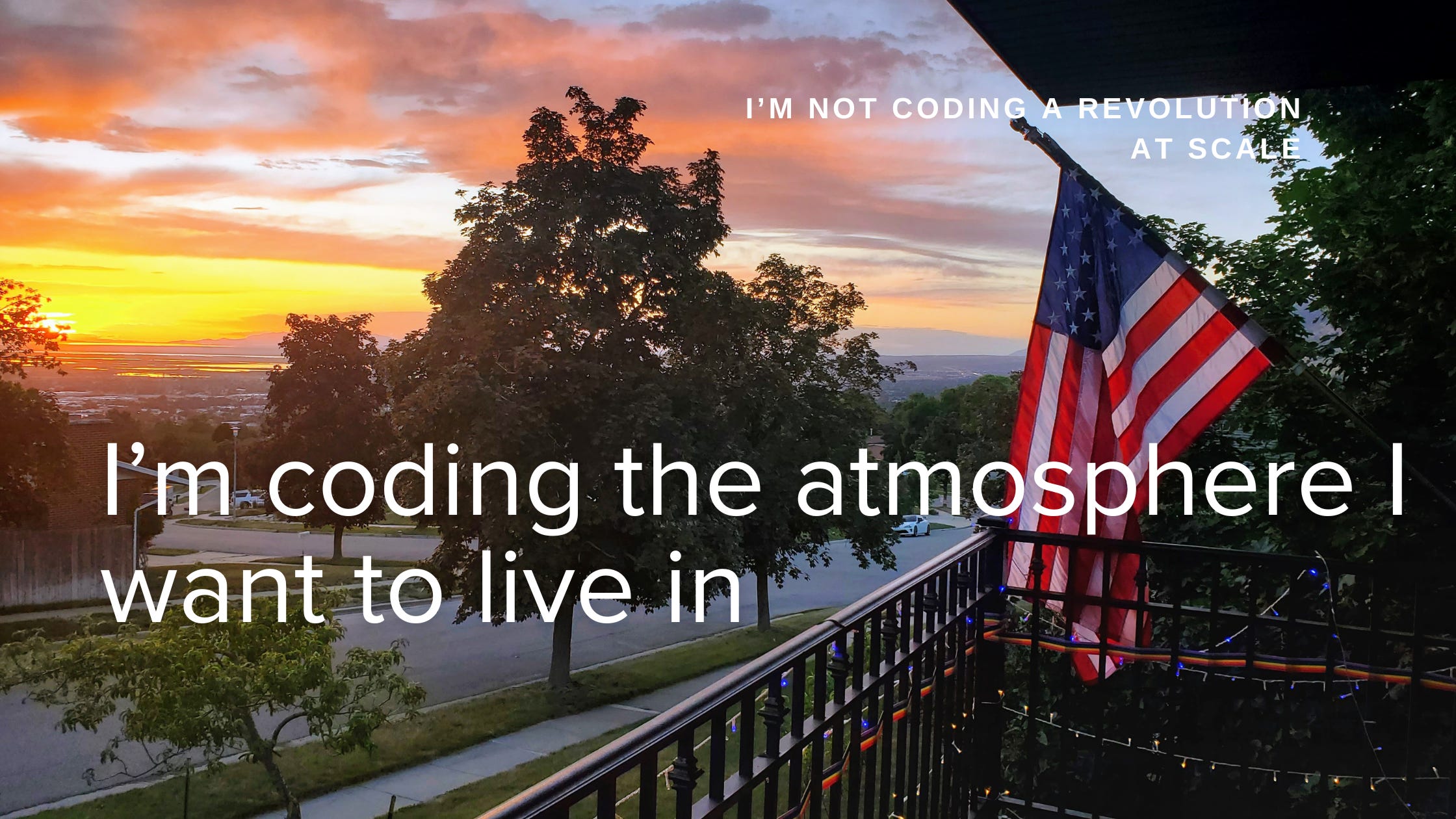
🕯️The garage flag sermon
When it’s my turn for school pickup, I park at the top of the sidewalk where the kids walk up from the playground. Across the street, the garage door of one house is often open. A large and unmissable “F*** Biden” flag is hanging on the back wall.
That’s what some of the elementary school kids see as they walk home.
That’s what my kids I’m picking up see. All the kids in the carpool are excellent readers.
And it’s what I see, too. For a long time, it hit me like a punch: a pang in my chest, a surge of anger and tightness that settled in.
I’ve had to work on that.
Because it’s not just a political difference. It’s the ethos behind it that guts me: domination, cruelty, and grievance-as-virtuel.
That ties this in with David Brooks’s article about a moral atmosphere because every sign, flag, and banner is part of that. Each one tells a story and sometimes, they preach.
“Paganism says: Make yourself the center of the universe. Serve yourself and force others to serve you. The biblical metaphysic says: Serve others, and you will find joy.”
—David Brooks
That flag in the garage? That’s not just free speech. It’s a sermon. A sermon preaching grievance, power, and domination.
And in this particular moral atmosphere, power becomes sacred.
In contrast, my son is friends with the daughter who lives there. While I’m simmering in judgment, he’s learning dance moves with her for their grad'e’s “world’s fair” performance. He doesn’t see her through the lens of political signage.
He’s teaching me to be better, just by being himself.
I’m trying to return the favor.
🏔️ Utah: a moral weather report
Years ago, I made a comment at a neighbor’s house about then-President Trump. It was casual, offhanded, and I assumed we all felt the same.
I was so naive.
Not all the moms there agreed, but smiled and we moved on. The ground hadn’t shifted yet, or maybe I hadn’t noticed.
In 2016, Utah resisted the MAGA movement. Trump won with just 45.5% of the vote—one of the lowest Republican margins in decades. Independent candidate Evan McMullin pulled 21.5% of Utah’s votes, a rare third-party spike from a state signaling discomfort. source
It felt like a line was holding.
But by 2020? Utah swung fully back. Trump won 58.1% of the vote. source
We all watched the same January 6th footage, didn’t we?
Here’s the thing: I watched things shift in my state in real time, and I still didn’t believe it.
In 2021, I led my neighborhood’s Republican caucus meeting (long story). Almost every person there railed against Mitt Romney. It felt like I was watching my neighbors spew out Fox News propaganda, which filled the air of the Jr. High auditorium. These neighbors didn’t know Romney, the man who once carried the moral center of the GOP. But they hated him. And they lionized Mike Lee.
That night, something broke in how I saw my community.
And statewide, the momentum had also shifted. Governor Spencer Cox endorsed Trump in 2024. Utah’s legislature followed suit with bills that mirrored the GOP’s national platform—education gag orders, DEI bans, and anti-LGBTQ measures. Working in the Salt Lake School District, my husband watched policy shifts land hard on real students.
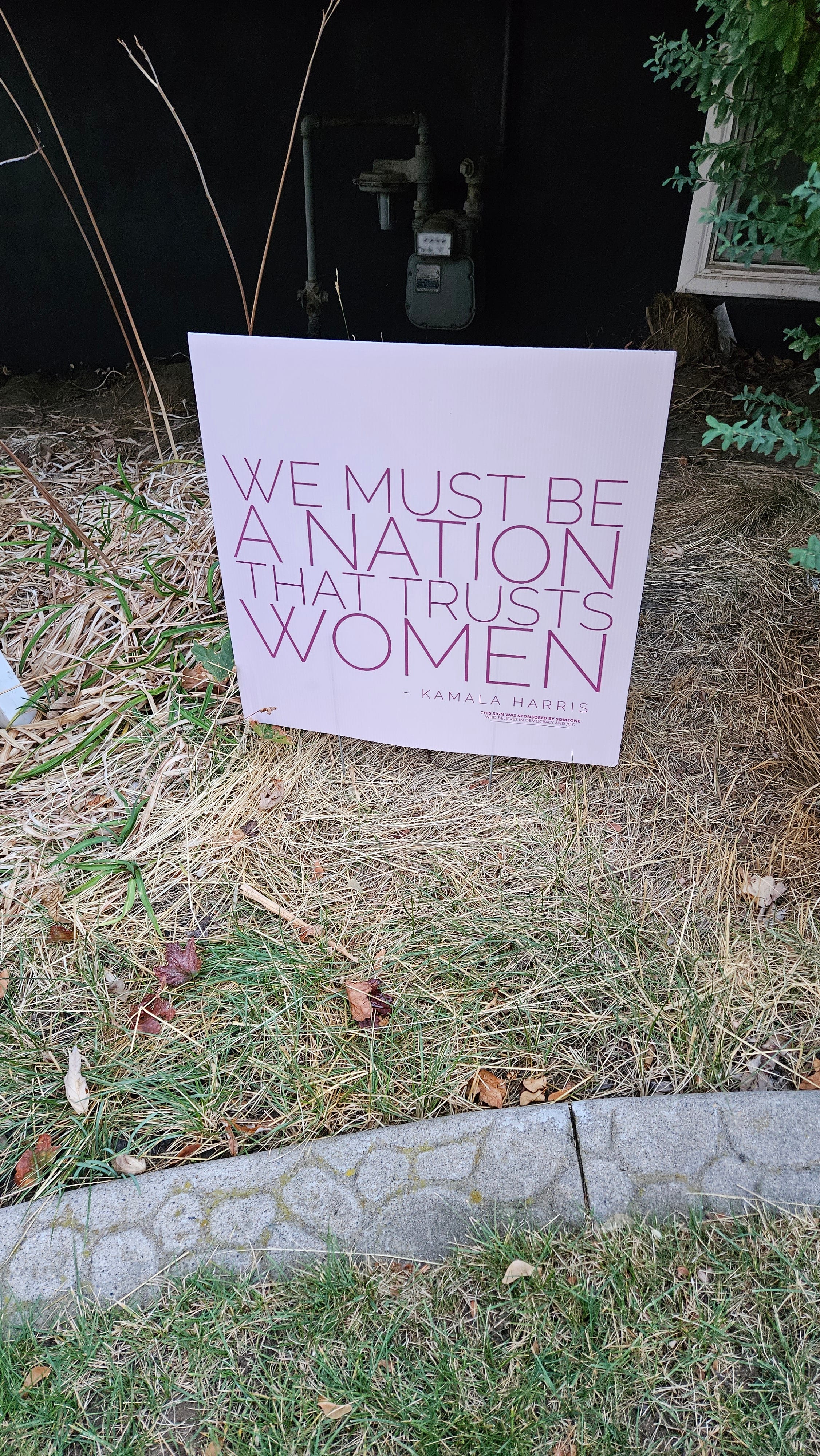
The Halloween before the election, my subtle Kamala Harris sign was stolen from out of my garden bed, far from the sidewalk. It wasn’t flashy or confrontational. But it was gone.
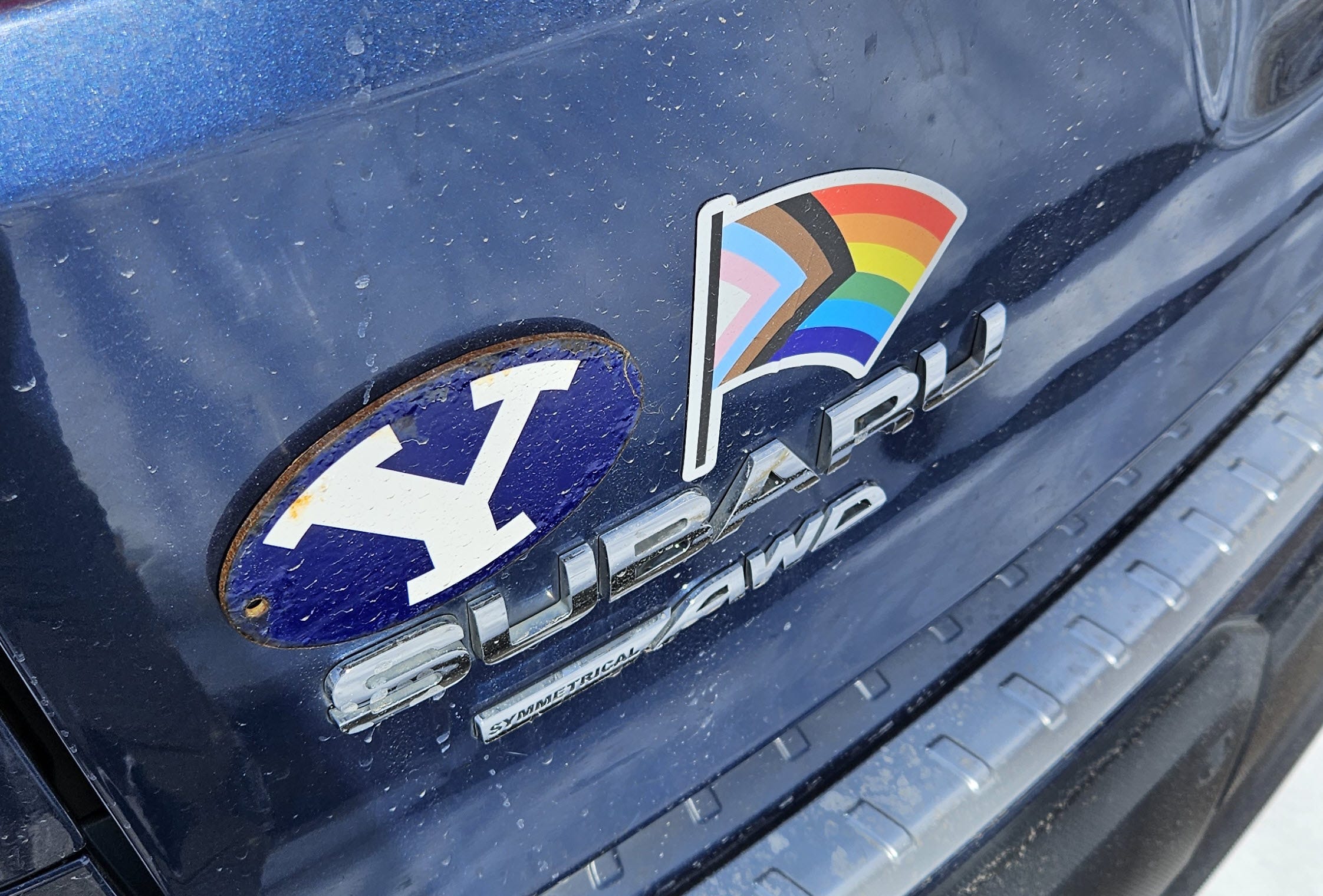
More recently, I had an ally flag magnet on my car. Someone pried it off and threw it in the church building trash, where my son found it.
Did you know? LGBTQ youth who live in a community that is accepting of LGBTQ people reported significantly lower rates of attempting suicide compared to those who do not? source
That’s the moral atmosphere I’m breathing. That’s the air I’m trying to clear.
I wonder—what kind of faith are we living if we can’t make space for compassion?
“Many great moral traditions have always stood against paganism and rebutted it,” Brooks writes. “If paganism stands for manly dominance, Judaism, for example, stands for piety, learning and strictness of conscience. Think of the words so highly valued in Jewish life: chesed (loving kindness), simcha (joy, especially communal joy), anavah (humility), tzedek (justice and charity), limud (study and learning) and kedushah (holiness). Those words lift us up to an entirely different moral realm.”
The person who threw away my magnet probably thought I was the problem. Probably saw me as too progressive or loud or just too much.
Can I wave a rainbow flag and a BYU magnet at the same time?
That’s the moral tightrope I’m trying to live on.
📡 The tech lens: how the algorithm feeds the spectacle
This shift towards paganism didn’t start with Trump.
Long before Twitter/X, algorithmic timelines, Fox News, or even Rush Limbaugh, American media was already shaping moral atmospheres and reshaping them.
Let’s do a little history lesson, shall we?
In the 1930s, radio gave ordinary Americans a direct line to the world outside their community. On the left, Louisiana’s populist firebrand, Huey Long, railed against Roosevelt for not going far enough with the New Deal. On the right, Father Charles Coughlin blasted government relief as creeping socialism.
By 1938, Coughlin wasn’t just a priest with a pulpit. He was a media empire. His broadcasts reached 15 million listeners a month. And in those broadcasts, he began to veer toward dangerous ideological terrain, saying things like: “Students of history recognize that Nazism is only a defense mechanism against communism.”
The Federal Communications Commission (FCC) watched Europe’s descent into fascism with growing alarm and worried whether it could happen here.
In 1941, they passed the Mayflower Doctrine, prohibiting radio stations from airing opinions that explicitly endorsed one side or another. To many conservatives, this wasn’t civic stewardship, it was silencing — a first step toward censorship.
Then came the Fairness Doctrine in 1949. It didn’t prohibit opinions, but required stations to present opposing viewpoints when covering controversial issues. In theory, it was balanced. In practice, it became another battle over who controlled the microphone.
By the 1960s, the tension sharpened. The news wasn’t neutral.
In Jackson, Mississippi, an NBC affiliate cut, WLBT, the feed when Thurgood Marshall appeared on national television after the Brown v. Board decision. Mississippi viewers saw a slide instead: “Sorry, cable trouble from New York.” The general manager of that station was a member of the White Citizens Council.
Stations refusing to cover civil rights weren’t anomalies. They reflected ownership structures. White-owned stations catered to white audiences, reliant on white advertisers. And when Black activists wanted to buy airtime? It was too expensive or denied.
Some stations paid a steep price for breaking those norms. A small number of Black hosts would broadcast on progressive stations, but the KKK bombed and destroyed offices, transmitters, and towers.
After a former congressman spoke about race relations on the Louisiana station, WBOX, the Klan inundated the station with phone calls, and 75% of commercials were canceled.
“When you become a target of the Ku Klux Klan, you soon learn that if there ever was a devil on the face of this earth, it lives, it breathes, it functions in the cloaked evil of the leaders of the Ku Klux Klan.”
Activists fought back. The United Church of Christ, alongside the local NAACP, sued the FCC over WLBT’s racist censorship. They won. The station’s license was stripped and handed to a nonprofit of white and black broadcasters, Communications Improvement, Inc.
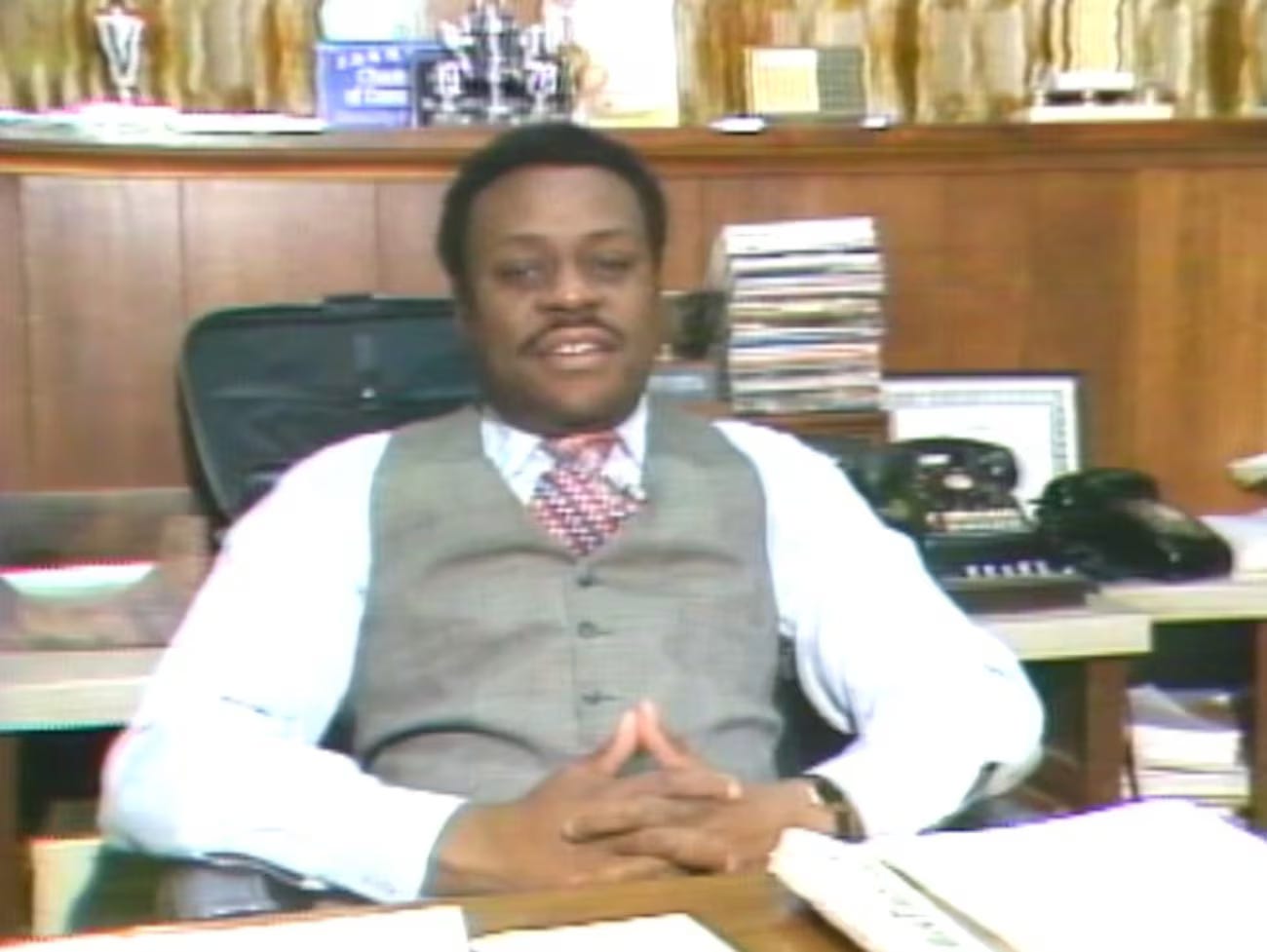
That legal victory set a precedent: local communities could challenge stations failing the public interest. Suddenly, news and public affairs programming weren’t just filler, but civic obligations.
For a time.
In the 1980s, conservative televangelists built their own media empires. Pat Robertson’s 700 Club blurred news and biblical commentary, wrapping Republican talking points in “family values” packaging. Meanwhile, FM radio pulled music audiences off the AM dial, leaving AM as a breeding ground for a new format: talk radio.
That’s when Reagan arrived on the scene. His FCC went about rolling back regulations, such as ascertainment, which required stations to determine the needs and wants of their communities. In 1987, they eliminated the Fairness Doctrine, and the last regulator was pulled off the so-called engine. No more balance requirements or license challenges for political bias.
Enter Rush Limbaugh.
Through barter syndication deals, his voice spread across the country, reaching markets that couldn’t have afforded his program otherwise. By the mid-90s, he wasn’t a talk show host, but the ideological backbone of AM radio.
The media landscape continued its dramatic shift when the Telecommunications Act of 1996 eliminated national ownership caps. A single company, Clear Channel, went from owning 43 stations to over 1,200. Their political programming followed the same “format purity” music stations used: all conservative, all day.
By the 2000s, a study found conservative talk outnumbered liberal or progressive talk by 10 to 1.
And that’s the broadcast ecosystem that shaped the early internet generation.
Then the algorithm entered the chat.
Social media inherited this monoculture and scaled it. On Facebook, YouTube, TikTok, X, there’s no “station manager” to challenge. No Fairness Doctrine. No gatekeeping.
Outrage is today’s dominant business model.
The algorithm doesn’t create the spectacle, it feeds it, optimizes it, and rewards it.
As Brooks writes:
“[Trump] creates a psychological and social atmosphere that suffuses the whole culture — the airwaves, our conversations, our moods.”
The algorithm knows that outrage works, grievance sells, and spectacle keeps you scrolling. Political paraphernalia sells across all ideologies. Every slogan seems to become a meme.
The spectacle of domination didn’t start online, but the algorithm scaled it. And monetizes it.
We’re all breathing that atmosphere. The question is whether we notice and are willing to breathe something else.
🙋♀️ Reflection
When a pickup truck cruises down the street waving a Trump flag, what’s the message they’re relaying?
To me it’s loud. Defiant. Triumphalist. A moral allegiance to domination, cruelty, and grievance.
I want to breathe a different atmosphere.
I’m far from perfect. But I want my choices to breathe compassion into a world choking on grievance.
The post-it notes on my desk remind me:
“His true disciples build, lift, encourage, and inspire, no matter how difficult the situation.” — Pres. Nelson
“Behavior that is ennobling, respectful, and representative of a follower of Christ.” — Pres. Nelson
“Contention is a choice. Peacemaking is a choice.”
“Make complacency the enemy.”
“Effective resistance vs. self-defeating outrage.”
“3 things I’m grateful for; 3 ways I was useful to others.”
“The Judeo-Christian ethos showed the world something loftier than paganism,” Brooks writes.
I’m trying to live in that loftier place.
📝 Ethical Technologist Notes
I spend a lot of time working in systems—writing technical documentation, mapping processes, organizing structure into clarity. I think in inputs and outputs, in mechanisms and feedback loops. And I notice when the inputs are poisoned.
We’re building systems and like Brooks wrote, we’re breathing them. Every platform we sign into, all of our doom scrolling, and the posts that we tap to like, those become our moral atmosphere. Spectacle may be profitable, but it’s a poor substitute for the truth. Algorithms optimize for attention not ethics. It’s up to me to decide how to use my agency. I have to insert compassion and clarity into the system or it will continue to optimize my own flavors of grievance, outrage, and domination.
I try to make small, human counter-offers. I don’t always get it right. I vent. Maybe I’m too quiet. Sometimes I think I’m being clever when I’m actually being snide. But I believe this deeply: the moral atmosphere changes when ordinary people shift the climate around them. Not in grand gestures, but in daily ones.
That’s why I still have blue and yellow lights across my porch. We put them up after the full-scale Russian invasion. They turn on every night.
That’s why I write. That’s why I add humor to hard truths and try to pause before reposting fury disguised as insight. Even in tech, where efficiency and scale rule the day, I believe in the slow work of choosing decency.
Resisting the spectacle isn’t glamorous. It’s quiet, deliberate, and often unnoticed. But maybe that’s what ethics is: the part of you that shapes the air, even when no one’s watching.
I’m not coding a revolution at scale.
But I can code a different atmosphere in my own circle.
Until the great voices rise again—
Until we hear the next King, the next Heschel, the next C.S. Lewis—
I’ll keep coding hope.
“I believe in the slow work of coding decency.” That is beautifully worded and even more beautifully lived ❤️
Thank you for so clearly conveying the context for all of this. I wonder if my dad would be moved by some of this history? I will try sharing it with him.