
Christian Nationalism, Apocalyptic Thinking, and the End of Empathy
The Ethical Technologist series: Faith, Power, and Political Myth, Post 3

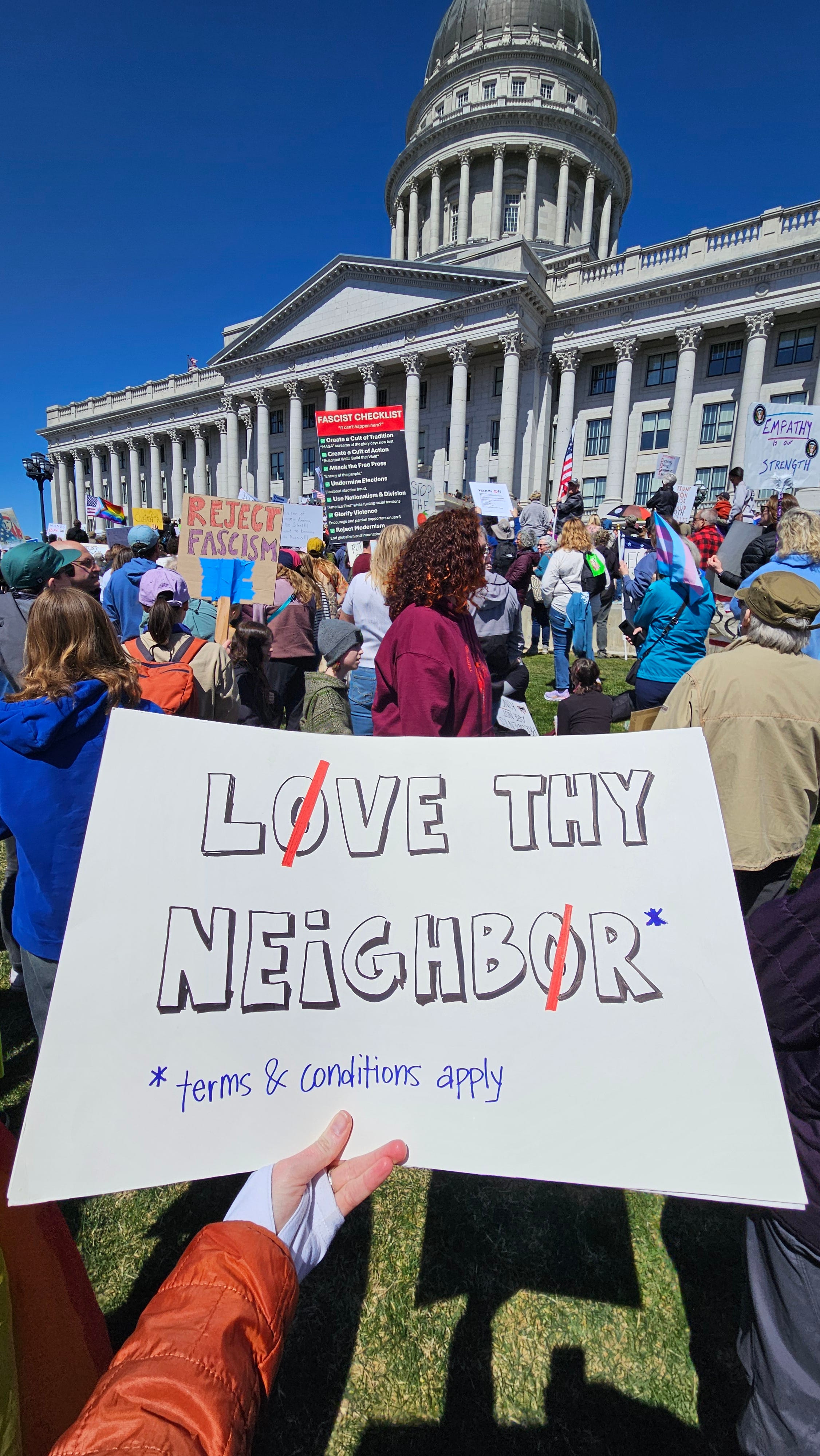
🕯️ When Fear Dons a Friendly Face
Last year, I was picking up my daughter from a friend’s house. Her friend’s parents were out of town, and the grandparents were holding down the fort. I stepped inside to grab her bag, and within sixty seconds, I found myself on the receiving end of a wide-eyed monologue about “what they’re doing to the kids these days.”
No names. No data. Just a vague and breathless warning about trans students “infiltrating the schools” and how parents had to “stay vigilant.”
You’d think someone was handing out hormone blockers in the lunch line.
Now, I didn’t feel anger so much as I felt the dull throb of heartbreak—the ache that hits when people, shaped by their own fears and media bubbles, pass that fear forward like an heirloom. These weren’t fringe radicals. These were doting grandparents with their shoes off and lemon bars on the counter. And the air between us felt suddenly unfamiliar.
The truth? I worry about my kids, too. But not because of an imagined bogeyman using the wrong bathroom. I worry about a world where fear has eclipsed compassion, where kindness is seen as weakness, and where people stop asking questions because they’re convinced they already know who the enemy is.
This post isn’t about them, though. It’s about me. It’s about what I’m trying to resist, and how easily that resistance erodes when I stop paying attention.
🏛️ What Christian Nationalism Really Is (and Isn’t)
Let’s clarify terms. Christian nationalism is not just Christianity plus patriotism. It’s not church potlucks with a flag outside. It’s not “God bless America” at the end of a sermon.
Christian nationalism is when national identity and divine authority are braided together so tightly that questioning political leadership feels like heresy. It transforms faith into a tool for statecraft, and the state into a vessel for religious absolutism. It doesn’t just wrap the cross in a flag but hoists it like a sword.
David Brooks gets to the point with precision: “Christian nationalism, which is paganism with worship music.”
I’m deeply troubled when the language of scripture is used to sacralize cruelty. When Jesus is used to justify power grabs and grievance politics. To me, that’s taking the Lord’s name in vain more than a passing “O.M.G.”
Christian nationalism isn’t about faith. It’s about domination cosplaying as righteousness.
But domination isn’t content to just wear robes and sing hymns. Sometimes, it needs a countdown clock.
📉 The End Times Make Everything Worse
Let’s talk eschatology—that’s theology’s $10 word for “the study of the end.”

Somewhere between John’s vision on Patmos and Facebook memes about FEMA camps, we lost the thread.
QAnon isn’t just a conspiracy theory. It’s a theology. It has sacred texts (8kun threads), prophets (digital influencers), martyrs (Ashli Babbitt), and a vision of final judgment where the righteous will be revealed and the evil ones arrested.
This kind of thinking isn’t just bad; it’s contagious. The same apocalyptic imagination that once fueled revivals now fuels rage. Instead of preaching about hope, the focus shifted to enemies, endgames, and the absolute necessity of destroying them before they destroy us. (Rene Girard and scapegoatism, if you want to do your own deep dive.)
Brooks puts it plainly:
“The callous tolerance of cruelty is a river that runs through human history. It was damned up, somewhat, only by millenniums of hard civilizational work.”
Good movements and religious groups did the hard civilizational work. In contrast, apocalyptic politics tears out those dams and calls it cleansing.
And if you believe the world is really ending, then what use is empathy? If your opponents are ushering in the apocalypse, aren’t you morally obligated to stop them by any means necessary?
I’ve seen people I know fall into this kind of thinking. And yes, it’s seductive. Fear always is.
🧪 The Pandemic, the Lab, and My Fraying Faith in People
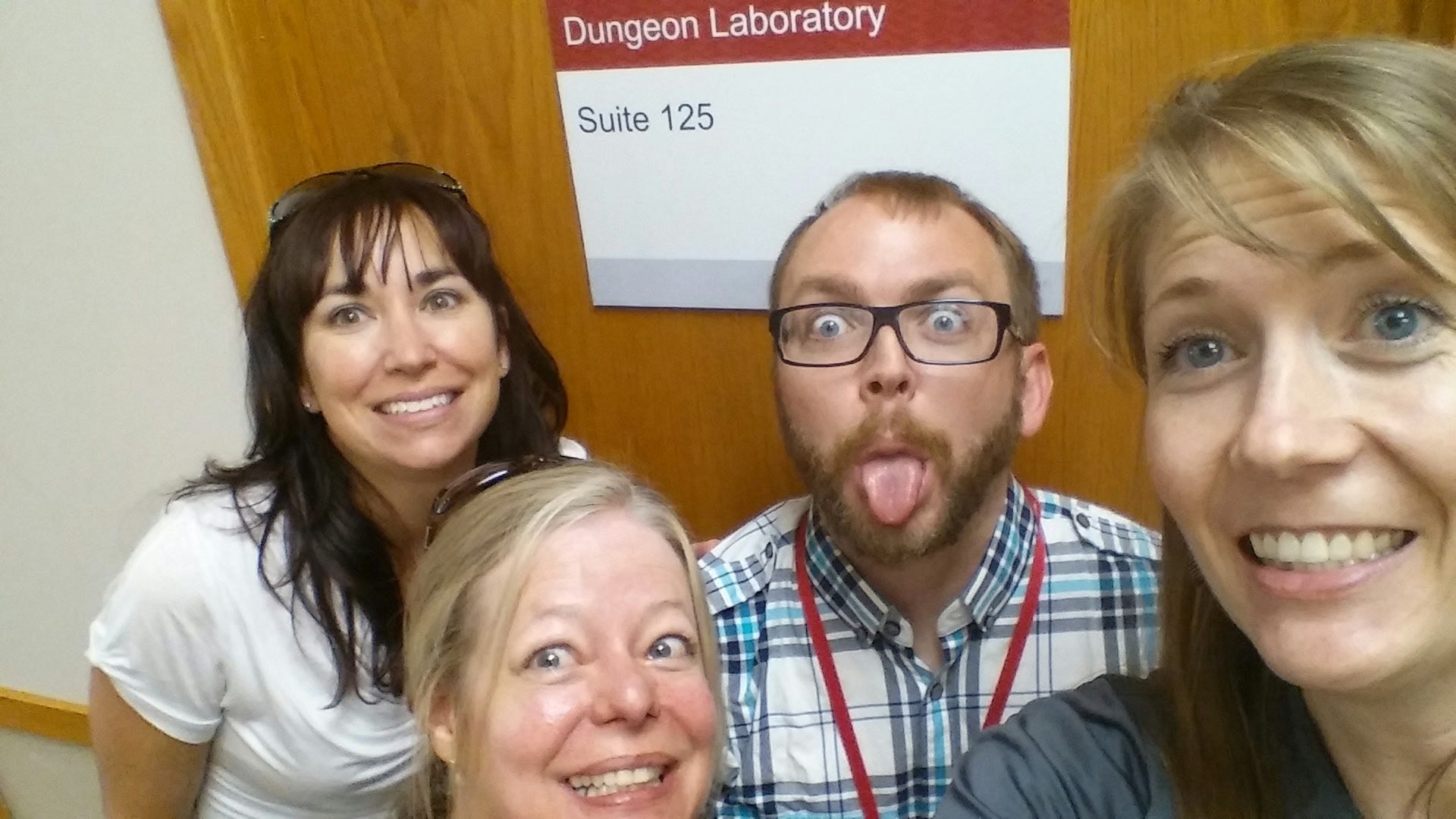
I used to work for ARUP Laboratories. For a decade, I lived it up in the IT department. We helped support the systems of a regional reference testing laboratory, including the infectious disease department. We had a public health reporting app, and when I was in software QA, I helped test that. The test cases included the HL7 pipelines that send those quiet little digital messages from labs to the public health departments.
I know the difference between a molecular test and an antigen test. I understand viral load, cycle thresholds, and how a PCR test isn’t some Orwellian mind probe but a tool that helps save lives.
So imagine how surreal it was, in 2020, to hear from someone close to me who told me the numbers were fake.
Not just exaggerated. Not misunderstood. Fake.
It was as if the labs were in on it. As if I had been in on it.
That conversation left a mark. It showed me how fear overrules lived reality — how the person beside you might trust a narrative rooted in anxiety over the evidence in front of them. And yes, I’ll say it: I’m an expert. I’ve worked inside the system, seen the data flow from swab to report, and personally know those developers who helped build the scaffolding that public health rests on.
Fear doesn’t care about credentials.
Fear makes truth negotiable. And once you’ve decided someone’s out to get you, decency becomes optional.
📱 The Algorithm Has Entered the Chat
Christian nationalism and political apocalypticism don’t spread on their own. They’re fertilized, cultivated, and scaled.
By what?
By tech.
By an algorithm that doesn’t care what’s true. It only cares what spreads.
Truth Social. Parler. Telegram. X. YouTube. Facebook. They’re more than platforms. They’re digital congregations of grievance, confusion, and righteous dread.
And every click sends a signal. “More of this.”
Brooks again:
“The pagan ethos — ancient or modern — always threatens to unleash brutality once again. The pagan ethos does not believe that every human was made in the image of God, does not believe in human equality, is not concerned about preserving the dignity of the poor.”
I wrestle with this in my job. I work in tech, write for systems, and document processes that other people build. But my digital community is focused on privacy and security.
The viral social media digital communities act more like cults than public squares.
There is no moderation infrastructure strong enough to hold back a tide of collective paranoia, and no community guidelines can outmaneuver an apocalyptic worldview. When we let the loudest voices dominate every space and reward hysteria with reach, we lose our ability to recognize compassion when it shows up.
It’s not a question of free speech. It’s a question of moral smog.
🪧 My Circle of Influence Is… Small
I can’t de-radicalize someone through a well-placed Facebook comment. I can’t out-code the algorithms. I can’t fact-check my way into someone’s heart.
What I can do is parent. Vote. Speak up in the spaces I inhabit.
And try not to let the rage rot my bones.
Most of the time, my resistance doesn’t look like a manifesto. It looks like a kid asking a question that surprises me. Or me trying to explain something complicated without spiraling into sarcasm. (Okay, less sarcasm.)
It looks like not disengaging when I’d rather disappear.
And let’s be honest—people know where I stand. I don’t blend in. But I try not to bulldoze.
My kids see the world more clearly than I did at their age. They’re often the ones teaching me how to show grace, how to listen, how to hold strong opinions without letting contempt win.
So I keep trying to be the example they deserve.
Even if the air is hard to breathe on some days.
📝 Ethical Technologist Notes
This isn’t a post with answers. It’s one with a warning.
We’re all swimming in a digital soup of end-times fever, Christian nationalism, algorithmic spectacle, and political despair.
But empathy isn’t a feature we can turn off. It’s a discipline we either practice or lose.
So I’m trying to practice. I post sticky notes on my monitor. I read from traditions that challenge my assumptions. I pause before sharing the snarky thread. I leave the porch light on for neighbors I disagree with, if you will.
As Brooks wrote:
“If you ever doubt the seductive power of paganism, remember it has conquered many of the churches that were explicitly founded to reject it.”
Let’s not pretend we’re immune.
But we can choose to remain human. Even when the world around us forgets how.
This was GOOD! Love your thoughts kn what we can do esp as parents. ❤️