
Beaumont to the Border: When Truth Dies in Our Echo Chambers
From Langston Hughes's 1943 warning to Trump's guard and marine deployments in L.A. — We're living in parallel realities built by curated narratives.

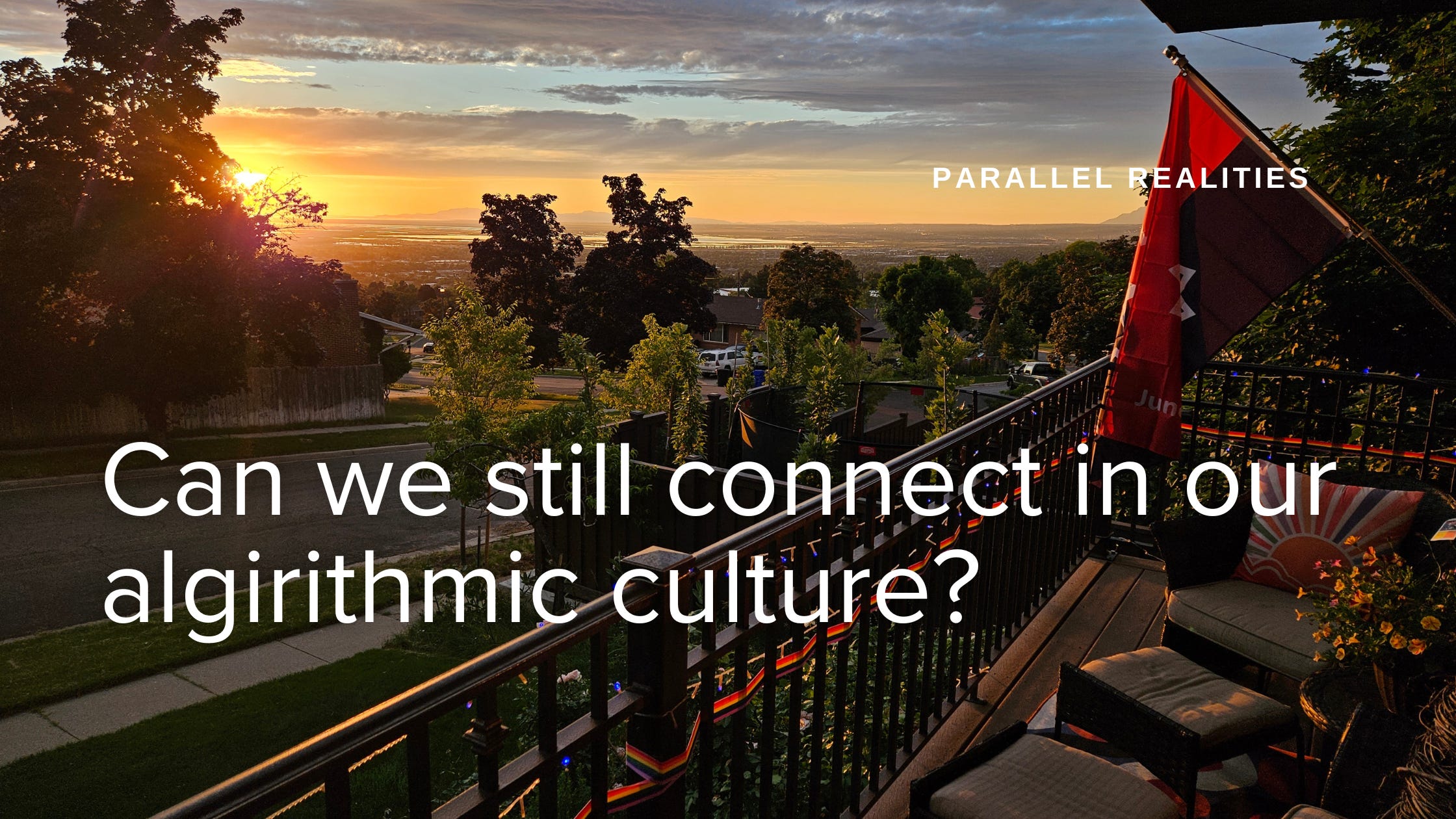
✊Federal troops, then and now
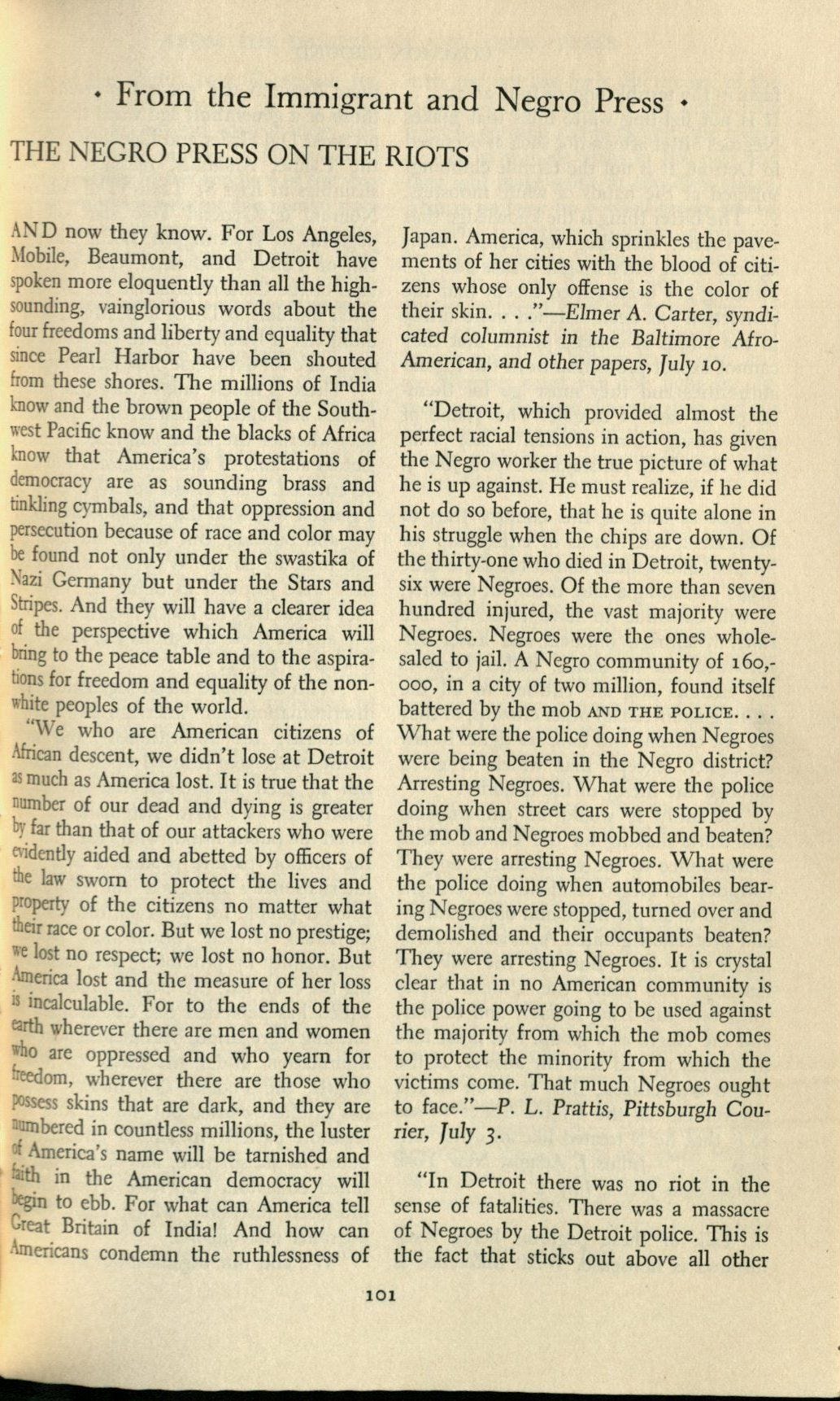
BEAUMONT TO DETROIT: 1943
Looky here, America
What you done done—
Let things drift
Until the riots come.
Now your policemen
Let the mobs run free.
I reckon you don’t care
Nothing about me.
You tell me that hitler
Is a mighty bad man.
I guess he took lessons
From the ku klux klan.
You tell me mussolini’s
Got an evil heart.
Well, it mus-a been in Beaumont
That he had his start—
Cause everything that hitler
And Mussolini do
Negroes get the same
Treatment from you.
You jim crowed me
before hitler rose to power—
And you’re STILL jim crowing me
Right now, this very hour.
Yet you say we’re fighting
For democracy.
Then why don’t democracy
Include me?
I ask you this question
Cause I want to know
How long I got to fight
BOTH HITLER—AND JIM CROW.
—Langston Hughes, syndicated by the Associated Negro Press, in New York People’s Voice and other papers, July 3.
Langston Hughes, writing in 1943 amid the Beaumont race riots, used poetic clarity to indict America’s hypocrisy: condemning Hitler while tolerating Jim Crow. Beaumont, a booming oil town, exploded in violence with nearly 4,000 people burning Black-owned homes and businesses under a mob mindset eerily similar to fascist cruelty.
That tragedy — ignored in history books — was a moment when local racism echoed European brutality. Hughes dared to ask, “When why don’t democracy include me?”
In 1965, President Lyndon B. Johnson sent federal troops to Selma, Alabama, not to crack down on protest, but to protect it. Marchers had been attacked on “Bloody Sunday” for demanding voting rights. The governor refused to act. The president intervened to defend their constitutional freedoms.
Decades later, in 1992, California’s governor, Pete Wilson, requested help from the federal government as unrest exploded in Los Angeles after the azquittal of four LAPD officers in the beating of Rodney King. In that case, the National Guard worked in support of local efforts to restore calm, but their presence was legitimized by state coordination, not a unilateral federal decree.
In both cases, federal involvement came with gravity and caution. The goal, at least on paper, was to de-escalate.
That’s not the story we’re watching unfold now.
When Trump announced the National Guard deployment to Los Angeles this week, without a request from California’s governer, it was performative. He didn’t frame it as de-escalation. He framed it as domination. As political theater. As a way to “restore order” in the face of “radicals.”
In this version, protest itself is the problem.
Langston Hughes saw this kind of inversion clearly in 1943. The structure of power deflected its responsibility, punished and aggrieved, and maintained the violent status quo. Whether in Texas or L.A., it’s who gets protected and why that tells you everything.
Today’s deployment, shrouded in MAGA rhetoric and ICE raids, invokes an authoritarian pantomime with alarming force.

🔁History repeats, when we let it
What does Hungary have to do with Hughes’s powem or the L.A. protests?
It’s the same moral atmosphere. One where propaganda trumps pluralism. Where media exists not to report but to reinforce. Where grievance becomes the national currency.
Echo chambers aren’t new. In Hungary, Viktor Orbán’s Fidesz party has captured over 80% of the media, steering what remains of “news” into a pro-government echo machine. Independent outlets that resist are throttled. Journlaists describe Hungary as a “predator of press freedom,” undermining checks and balances.
The result is a reality constructed for loyalty. Not for truth.
In the U.S., Trump’s echo chamber isn’t state-controlled, but his most loyal followers live in a self-reinforcing broadcast loop: Fox, online forums, MAGA social feeds, targeted merch, and memes curated to inflame. There is no challenge, only affirmation. As Hungary proves, democracy doesn’t die with a single blow, but it erodes under repetition.
When I hear someone close to me parrot statements that sidestep documented facts, I understand how echo chambers warp perception. They aren’t ignorance; they’re isolation.
Langston Hughes wrote his poem as a protest against the same dynamic. Americans condemned fascism abroad while ignoring fascistic behavior at home. That duplicity runs deep. It’s how brutality survives in a country that claims freedom as its highest ideal.
🪞Viewing different Americas
Kyla Scanlon posted a video on Instagram today about the protests in L.A. She compared them with the polished promises of Apples VR future, a world where vision is frictionless and reality is fully customizable.
“We are purely a visual society at this point,” she said.
We’re living in two different realities, she said. Scanlon’s insight is about more than contrast. It’s about how disconnected we’ve become from a shared story. If everything is framed, cropped, and optimized for the user, how do we see the entire picture?
That divergence isn’t limited to the digital realm. It exists in families, too.
I’ve had conversations with people close to me, people I love, who describe a version of this country that isn’t the same picture I see. They believe things i know to be false. They’re not lying to me. They’re living in a world I can’t access (because I choose not to). I feel like I’ve lost them to a curated algorithm of half truths.
My camera captures different images. My algorithm rewards different truths.
That’s the fracture Hughes wrote about.
That’s the America we’re still struggling to reconcile.
We’re living in different realities because of our echo chambers. I scribbled this poem. It’s not some literary masterpiece. But it’s about my moment today. Take it or leave it.
A WORLD IN PICTURES
A world in pictures
but my pictures
aren't your pictures
so we live
in different worlds.
My camera faces the singing,
dancing,
and the chanting.
Your camera faces the barricade,
the tear gas,
and the burning waymo.
We live in different
worlds.
You tell me a story
of American history
and it's not the same
as the history
I've read.
We live in different
worlds.
You tell me we're
going
to make things great
again.
And I wonder when things
were once great for all.
We live in different
worlds.
You tell me the kids
aren't safe at school
and in libraries
or in the bathroom.
I tell my kids
to be kind,
to love,
to try and not judge,
even when the person
is driving an American
flag around from the back
of their truck.
My kids remind me to love
my brother
better.
We live in different
worlds.
Lauren Elkins Jun 10, 2025
🕯️Choosing remembrance
I don’t accept that we no longer have a shared reality in this country. I’m not okay living in my echo chamber while everyone else lives in theirs. I refuse to let a friend or family member’s loyalty to a narrative replace the lens of a shared history, one that holds demons and redemption in tension.
I believe we can remember Langston Hughes’s please: democracy must include us all. We can recognize the dangers of deploying troops to suppress protest, or rewriting facts about who holds power and who bears the consequences.
It hurts to watch those I love drink from a poisoned well of curated outrage. But I won’t stop speaking truth or sharing real rifts in our nation’s story. Even if I’m the only one listening to myself.

📝Ethical Technologist Notes
My daily work as a technical writer is full of metrics, tickets, and jargon, but it’s across a global spectrum of coworkers. Outside of work, I learn different lessons each week from my Bountiful neighborhood. This morning, I received a text from a friend and neighbor saying thanks for doing a bit of weeding. She was only unconscious in the ICU while I did such a small thing. But it was shared humanity. That’s what matter.
Programming empathy isn’t glamorous. It’s reminding my kids that different streams of information exist and they need to swim upstream. Writing poetry in the morning, sharing Langston Hughes, sitting down for dinner together where we try to choose curiosity over division (I’m still really trying to do this better). That’s where I’m working on “coding” a new moral framework: one that remembers history, brings kindness into real spaces, and refuses to let a single narrative overwrite our shared humanity.
I’m not living in the MAGA world, but I’m also not staying silent in mine.